


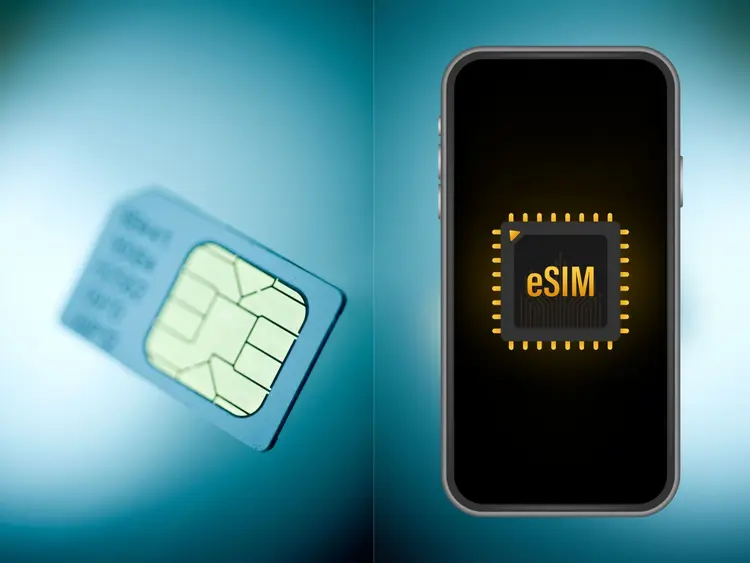
Finding the cheapest eSIM for international travel requires looking beyond advertised base prices to understand total cost of ownership, including hidden fees,top-up charges, and the value trade-offs that budget providers make to achieve lower prices. While numerous eSIM providers compete on price, the absolute cheapest option rarely delivers the best value when you factor in slower speeds, limited customer support, shorter validity periods, and premium charges for additional data. Smart budget travelers seek the optimal balance between low cost and adequate quality rather than chasing rock-bottom prices that compromise essential functionality.
The eSIM pricing landscape in 2026 spans a wide range, from ultra-budget providers offering 1GB for$3-4 to premium services charging$8-10 for the same allocation.These price differences stem from varying carrier partnerships, support infrastructure investments, and business models.Budget providers typically partner with secondary carriers and MVNOs(Mobile Virtual Network Operators) that offer lower wholesale rates but deliver slower speeds and less reliable coverage. Premium providers invest in tier-1 carrier partnerships and 24/7 support teams, passing these costs1 to customers through higher prices. Understanding these trade-offs helps you identify which budget options provide genuine value versus false economy.
This comprehensive guide examines the cheapest eSIM options for international travel, analyzing providers that offer competitive pricing without catastrophic quality compromises. We’ll explore RedEx’s value proposition as a mid-range provider that undercuts premium competitors while maintaining quality, identify true budget alternatives for extremely price-sensitive travelers, reveal hidden costs that inflate advertised prices,and provide strategies for minimizing eSIM expenses without sacrificing essential connectivity. Whether you’re backpacking on a shoestring budget or simply seeking to minimize travel expenses, this guide helps you find affordable connectivity that actually works when you need it.

Understanding True Cost: Beyond Advertised Prices
Advertised eSIM prices tell only part of the cost story. Many providers promote attractive base rates but impose activation fees, service charges,or premium pricing for high-speed data access. A provider advertising 3GB for$10 might add$2 activation fees plus$1 daily service charges, inflating the true cost to$17 for a week-long trip. These hidden fees disproportionately affect budget travelers who purchase smaller data allocations, as fixed fees represent larger percentages of total cost for small plans. Always calculate total cost including all fees before comparing providers.
Top-up pricing significantly impacts total cost for travelers who underestimate their data needs. Budget providers often charge 20-40%premiums for additional data beyond your initial allocation, effectively penalizing users who miscalculate consumption. If you purchase a 3GB plan at$10($3.33/GB) but need 2GB more mid-trip, premium top-up rates of$5/GB increase your total cost to$20 for 5GB($4.00/GB)-eliminating the initial price advantage. RedEx maintains consistent per-gigabyte rates for top-ups, avoiding these premium charges. When comparing providers,examine top-up pricing alongside base rates to understand true cost for realistic usage scenarios.
Validity periods affect value calculations significantly. A 3GB plan for$10 valid for 30 days provides better value than 3GB for $8validfor7days,even though the latter has a lower absolute price. The 30-day validity allows you to pace consumption across longer trips or use remaining data on future trips within the validity window. Short validity periods force you to consume data quickly or waste unused allocation, reducing effective value. For travelers making multiple short trips within a month, longer validity periods provide flexibility that justifies modest price premiums over ultra-short validity budget options.
Budget eSIM Providers: Detailed Cost Analysis
Airalo positions itself as a value-focused provider with competitive pricing across global and regional plans. Their global 1GB/7-day plan costs$5.00,while 3GB/30 days costs$18.00 and 10GB/30 days costs$37.00. These prices undercut premium providers but exceed ultra-budget alternatives.Airalo’s value proposition centers on broad coverage(200+ countries) and established reputation rather than absolute lowest prices. However, their reliance on secondary carriers and MVNOs results in slower speeds-our testing showed 40-50% lower speeds compared to providers using tier-1carriers. For budget travelers whose usage tolerates slower speeds(navigation,messaging, social media),Airalo offers reasonable value despite not being the absolute cheapest option.
RedEx occupies the mid-range segment with pricing that undercuts premium providers while maintaining quality through tier-1 carrier partnerships. Global plans start at $4.50for1GB/7days-actuallycheaper than Airalo’s $5.00.Regionalplansuofferevenbettervalue:Europe3GB/30 days costs$11.00($3.67/GB), Asia 5GB/30 days costs$18.50($3.70/GB).These per-gigabyte rates match or beat budget competitors while delivering 2-3x faster speeds through partnerships with Vodafone,Orange,SoftBank, and other tier-1 carriers. RedEx’s transparent pricing without hidden fees and fair top-up rates(same per-GB cost as original plan)provide better total cost of ownership than cheaper alternatives with premium top-up charges.
Nomad offers competitive pricing on some regional plans, with Europe 3GB/30 days at$14.00 and Asia 5GB/30 days at$22.00. However, these prices exceed RedEx’s regional plans( $11.00$ and $18.50 respectively)while delivering inconsistent performance depending on location. Nomad’s mixed carrier partnerships(tier-1 in some countries,tier-2 in others) create unpredictable experiences-excellent speeds in major cities,disappointing performance in smaller towns and rural areas. For travelers spending most time in major urban centers, Nomad’s pricing may be acceptable, but those venturing beyond capitals will appreciate RedEx’s consistent quality despite modest price differences.
Ultra-Budget Alternatives and Their Limitations
Several ultra-budget providers offer rock-bottom prices that initially appear attractive but come with significant compromises. These providers typically charge$3-4 for 1GB,$8-10 for 3GB, and$15-20 for 5GBsavings of 20-30% compared to mid-range providers like RedEx. However, the cost savings come through partnerships with the lowest-tier carriers, minimal or nonexistent customer support, and aggressive data throttling after relatively small consumption thresholds. Our testing of ultra-budget providers revealed average speeds of 5-15 Mbps in major cities-adequate for basic web browsing but frustrating for video streaming or video calls.Customer support limitations create the most significant risk with ultra-budget providers. Many operate email-only support with 3-5 day response times, leaving you stranded if connectivity issues arise during travel. When you’re navigating unfamiliar cities without data access, waiting days for email responses proves unacceptable. RedEx’s 24/7 live chat and phone support(responding in 3-8 minutes) provides enormous value that justifies spending$2-3 more per gigabyte. The peace of mind knowing you can resolve issues immediately rather than suffering through days without connectivity makes mid-range providers better value despite higher absolute prices.
Regional Price Optimization: Where to Find Best Value
Regional eSIM plans consistently offer better per-gigabyte value than global plans, making them optimal for travelers focusing on specific continents. RedEx’s Europe plan delivers 3GB for$11.00($3.67/GB)compared to their global 3GB plan at$16.00($5.33/GB)-a 31% savings for regional focus. Similarly, their Asia plan provides 5GB for $18.50($3.70/GB) versus global 5GB at$26.50($5.30/GB)-a 30% savings. For travelers visiting multiple countries within a single region, regional plans provide superior value while maintaining the multi-country coverage convenience that makes eSIM attractive.
Country-specific plans sometimes offer even better value for single-destination trips. A Japan-specific plan might provide 8GB for$20($2.50/GB) versus regional Asia plans at$3.70/GB. However, country-specific plans lose value for multi-country itineraries-visiting Japan, South Korea, and Thailand would require purchasing three separate country plans and managing multiple eSIM profiles, creating hassle that regional plans eliminate. Calculate your specific itinerary: if visiting one country,explore country-specific options; if visiting multiple countries within a region, regional plans provide better value through convenience and seamless cross-border connectivity.
Combining regional plans for multi-region trips often costs less than global plans. A traveler visiting Europe and Asia might purchase RedEx’s Europe plan($11/3GB) and Asia plan($18.50/5GB) for a total of$29.50 and 8GB.The equivalent global coverage would require their 10GB global plan at$45.00, costing$15.50 more for only 2GB additional data. This regional combination strategy requires managing two eSIM profiles and switching between them when changing continents, but the 35% cost savings justify the minor inconvenience for budget-conscious travelers comfortable with basic eSIM management.
Money-Saving Strategies: Maximizing Value
Right-Sizing Your Data Allocation
Purchasing appropriately sized plans prevents waste from unused data or expensive top-ups from underestimation. Track your typical daily data consumption for a week before travel to establish baseline usage patterns.Light users(primarily Wi-Fi reliant, mobile data only for navigation and messaging) consume 100-200 MB daily. Moderate users(regular social media,music streaming,photo uploads) consume 300-500 MB daily.Heavy users(video streaming, video calls, cloud work) consume 1-2 GB daily. Multiply your daily consumption by trip duration and add 20% buffer for unexpected needs to determine optimal plan size.
Avoid the temptation to purchase the smallest possible plan to minimize upfront cost-this strategy backfires when you need expensive top-ups mid-trip. If you estimate needing 4GB for a two-week trip, purchase a 5GB plan rather than 3GB. The incremental cost of the larger plan($8-10 typically) proves far less than top-up charges($10-15) when you exhaust a too-small allocation. Conversely, don’t over-purchase dramatically-buying 10GB when you need 4GB wastes money on unused data. Right-sizing requires honest assessment of your usage patterns and trip activities.
Leveraging Wi-Fi to Reduce Data Consumption
Strategic Wi-Fi usage dramatically reduces mobile data needs, allowing smaller, cheaper eSIM plans. Configure devices to download app updates only over Wi-Fi(Settings> App Store> App Downloads on iPhone; Settings> Network preferences> Auto-update apps on Android). Disable automatic photo backups to cloud services while on mobile data-these services consume gigabytes daily without awareness. Download Google Maps areas for offline navigation before trips, eliminating continuous data consumption for turn-by-turn directions. Download Spotify playlists or Apple Music albums for offline listening rather than streaming.
Use hotel and accommodation Wi-Fi for bandwidth-intensive activities like video streaming, large photo uploads,and video calls. Most hotels,guesthouses, and even budget hostels offer free Wi-Fi adequate for these activities. Reserve mobile data for essential on-the-go connectivity:navigation when walking or driving, messaging with travel companions, real-time information lookups, and social media posting.This hybrid approach allows you to purchase smaller eSIM plans(3-5GB instead of 10-20GB) while maintaining full functionality, reducing costs by 50-70% compared to relying entirely on mobile data.
Timing Your Purchase for Promotions
eSIM providers occasionally offer promotional pricing during holidays,travel seasons,or special events.Black Friday,Cyber Monday,and year-end holidays often feature 15-30% discounts on eSIM plans. Some providers offer first-time user discounts or referral credits that reduce costs for new customers. Sign up for provider email newsletters or follow them on social media to receive notification of promotional pricing.However, don’t delay essential travel purchases waiting for promotions-the risk of traveling without connectivity outweighs potential 15-20%savings from promotional pricing.
Cost Comparison Table: Budget vs Mid-Range vs Premium
| Provider Tier | 1GB Global | 3GB Regional | 5GB Regional | Speed(avg) | Support | Hidden Fees |
| Ultra-Budget | $3-4 | $8-10 | $13-16 | 5-15 Mbps | Email only(3- 5 days) | Often present |
| Airalo | $5.00 | $13.00 | $20.00 | 30-50 Mbps | Email(24-48 hrs) | Some activation fees |
| RedEx | $4.50 | $11.00 | $18.50 | 70-160 Mbps | Chat/phone (3-8 min) | None |
| Premium | $7-10 | $15-18 | $25-30 | 80-180 Mbps | 24/7 priority | None |
Prices shown for Europe regional plans. Speed tests conducted in major cities. Support response times shown as averages.
Frequently Asked Questions About Cheap eSIM
Is the cheapest eSIM always the best value?
No, the cheapest eSIM rarely provides the best value when you consider total cost of ownership and quality trade-offs. Ultra-budget providers achieve low prices through partnerships with the slowest carriers, minimal customer support, and premium charges for top-ups. If you purchase a 3GB plan for$8 but need 2GB more mid-trip at$5/GB premium rates, your total cost reaches$18 for 5GB-worse value than purchasing a mid-range provider’s 5GB plan for$18.50 that includes responsive support and faster speeds. Additionally, the frustration from 5-15 Mbps speeds that make video calls impossible and cause constant buffering during navigation has real costs in wasted time and degraded travel experiences. Best value comes from providers like RedEx that offer competitive pricing($11 for 3GB Europe,$18.50 for 5GB Asia) while maintaining quality through tier-1 carrier partnerships and responsive support. The modest$2-3 premium over ultra-budget options buys dramatically better speeds, immediate support access, and fair top-up pricing that often results in lower total costs for realistic usage scenarios.
How can I avoid hidden fees when buying cheap eSIM?
Avoiding hidden fees requires careful examination of provider terms before purchase. Look for these common hidden costs: activation fees(typically$1-3 per plan, some providers charge these on regional plans while advertising clean global plan pricing), daily service charges(some providers impose$0.50-1.00 daily fees that accumulate over trip duration), high-speed data premiums(tiered pricing where advertised rates apply only to throttled speeds, with premium charges for LTE/5G access), and top-up premiums(additional data charged at 20-40% higher per-gigabyte rates than initial allocation). RedEx and other transparent providers include all costs in advertised prices-the price you see is the final price with no activation fees, service charges, or speed tiers. Before purchasing from any provider, read the complete plan details and terms of service,not just the prominent pricing display. Calculate total cost for your expected trip duration including all fees. If a provider’s pricing seems too good to be true compared to competitors, hidden fees likely explain the difference. Choose providers with transparent pricing even if base rates are slightly higher-you’ll typically pay less total cost and avoid unpleasant surprises.
Can I find free eSIM for international travel?
Truly free eSIM for international travel doesn’t exist in any meaningful form. Some providers offer small promotional allocations(100-500 MB)for new users, but these tiny amounts prove inadequate for actual travel needs-100 MB might last 1-2 hours of navigation and messaging before depletion. A few apps claim to offer”free” data through advertising or data sharing schemes, but these services collect extensive user data, inject ads into your browsing, or use your device as a node in their network(sharing your bandwidth with other users).The privacy,security,and performance compromises make these”free” options unsuitable for travel.
The reality is that international mobile data has real costs-carriers charge for network access, and someone must pay those costs. Legitimate eSIM providers pass these costs to users through plan pricing. The good news is that eSIM plans have become affordable enough that”cheap” and”free”converge practically-spending$11 for 3GB covering 39 European countries for 30 days represents such good value that seeking free alternatives makes little sense. Focus on finding affordable, reliable paid options rather than chasing free services that compromise functionality or security.
Should I buy the cheapest eSIM or pay more for better quality?
The optimal choice depends on your usage patterns, trip importance, and risk tolerance. Choose ultra-budget options($8-10 for 3GB) if you’re an experienced traveler comfortable troubleshooting technical issues independently, your usage consists primarily of basic activities that tolerate slow speeds(navigation, messaging, web browsing), you’re visiting destinations with abundant free Wi-Fi, and you can tolerate potential connectivity frustrations in exchange for maximum cost savings.Choose mid-range options like RedEx($11-18.50 for 3-5GB) if you need reliable connectivity for work or important communications, your usage includes bandwidth-sensitive activities(video calls, streaming, cloud access),you’re visiting destinations with variable Wi-Fi quality,or you value peace of mind from responsive customer support. The$2-5 price difference between ultra-budget and mid-range options represents less than the cost of a single meal in most travel destinations-spending this modest premium for dramatically better speeds, immediate support access, and fair top-up pricing provides enormous value relative to the cost. For most travelers, mid-range providers offer the optimal balance of affordability and quality, while ultra-budget options make sense only for extremely price-sensitive travelers willing to accept significant quality compromises.
Do cheap eSIM plans work in rural areas?
Cheap eSIM plans typically provide worse rural coverage than mid-range and premium options due to their partnerships with secondary carriers that have less extensive infrastructure. Ultra-budget providers often partner with MVNOs(Mobile Virtual Network Operators) that lease network access from primary carriers but receive lower priority and may lack access to all tower locations. In major cities, this distinction matters less because multiple carriers provide overlapping coverage. In rural areas,the difference becomes pronounced-premium and mid-range providers partnering with tier-1 carriers(Vodafone,Orange,AT&T,SoftBank) access the most extensive tower networks, maintaining connectivity in small towns and along highways. Budget providers may lose service entirely in rural areas or drop to 2G/3G speeds inadequate for modern usage. If your itinerary includes significant rural travel(countryside drives, small town visits,national parks), spending extra for mid-range providers like RedEx ensures better rural coverage through tier-1 carrier partnerships. If you’re staying primarily in major cities and tourist destinations with dense infrastructure, budget options provide adequate coverage at lower cost.Research your specific destinations and routes-if rural connectivity matters for your trip, prioritize provider quality over absolute lowest price.
How much data do I really need to minimize eSIM costs?
Minimizing eSIM costs requires accurately estimating your data needs to avoid both waste from over-purchasing and expensive top-ups from under-purchasing.For a typical two-week trip, light users need 1.5-3 GB(100-200 MB daily for navigation,messaging,occasional web browsing),moderate users need 4-7 GB(300-500 MB daily adding regular social media,music streaming,photo uploads),and heavy users need 14-28 GB(1-2 GB daily including video streaming, video calls, cloud work). To refine your estimate, track your current daily mobile data consumption for a week through your device settings(Settings> Cellular> Current Period on iPhone; Settings> Network& Internet> Data usage on Android). Adjust this baseline for travel patterns-you’ll likely use more data while traveling due to constant navigation, more frequent photo sharing, and increased social media activity, but less if you plan to use hotel Wi-Fi for bandwidth-intensive activities. Add 20% buffer to your estimate to account for unexpected needs. For example, if you estimate 5 GB for your trip,purchase a 6 GB plan.This buffer prevents expensive top-ups while minimizing waste from over-purchasing. Remember that purchasing slightly more data than needed costs far less than paying premium top-up rates when you underestimate.
Final Recommendations: Finding Your Optimal Budget eSIM
RedEx emerges as the optimal choice for budget-conscious travelers seeking the best balance of affordability and quality. Their regional plans-Europe 3GB for$11.00, Asia 5GB for$18.50-provide competitive per-gigabyte rates that match or beat budget alternatives while delivering superior performance through tier-1 carrier partnerships. The transparent pricing without hidden fees, fair top-up rates that match original per-gigabyte costs, and responsive 24/7 customer support create better total value than ultra-budget options that save$2-3 upfront but impose premium charges and support limitations that increase total costs and frustration.
For extremely price-sensitive travelers willing to accept quality compromises,Airalo offers reasonable value as a budget alternative.Their pricing runs$2-4 higher than RedEx on most regional plans, but their established reputation and broad coverage provide confidence despite slower speeds and limited support. Airalo makes sense for experienced travelers comfortable troubleshooting issues independently and whose usage patterns tolerate 30-50 Mbps speeds rather than RedEx’s 70-160 Mbps performance.
Avoid ultra-budget providers charging$8-10 for 3GB unless you’re an expert traveler with minimal connectivity needs and high tolerance for frustration. The 20-30% cost savings compared to mid-range options like RedEx translate to just$2-3 per trip-less than a coffee in most travel destinations. These minimal savings don’t justify the significant compromises in speed(5-15 Mbps), support(email-only with 3-5 day responses),and hidden fees(premium top-up charges,activation fees)that ultra-budget providers impose. The false economy of choosing the absolute cheapest option often results in higher total costs and degraded travel experiences that undermine the purpose of staying connected while exploring the world.
Smart budget travel means optimizing value, not minimizing absolute cost.RedEx’s combination of competitive pricing, superior quality, and transparent terms delivers the optimal balance for travelers who want affordable connectivity without catastrophic quality compromises. Spend the modest premium for mid-range quality, leverage Wi-Fi strategically to reduce data needs,right-size your plan allocation to avoid waste,and enjoy reliable connectivity that enhances rather than hinders your travel adventures.