


The debate between eSIM and physical SIM cards has evolved significantly since eSIM technology first appeared in consumer devices in 2018. What began as a niche feature available only in premium smartphones has become mainstream, with most devices released after 2019 supporting eSIM alongside traditional SIM card slots. This dual capability raises important questions for consumers: when should you use eSIM versus physical SIM? What are the genuine advantages and limitations of each technology? How do they compare for international travel, everyday use, and specific scenarios like dual SIM functionality or device switching?
Understanding the practical differences between eSIM and physical SIM cards requires moving beyond marketing claims to examine real-world implications. eSIM offers undeniable convenience advantages—instant activation without visiting stores, ability to store multiple carrier profiles, and elimination of physical card management. However, physical SIM cards provide universal compatibility, simpler device transfers, and independence from manufacturer ecosystems. Neither technology is universally superior; instead, each excels in specific use cases and user scenarios.
This comprehensive comparison examines every dimension where eSIM and physical SIM cards differ: activation and setup processes, international travel convenience, dual SIM functionality, device compatibility, security considerations, carrier support, cost implications, and practical scenarios where one technology clearly outperforms the other. Whether you’re deciding which technology to use for your next international trip, evaluating whether to switch from physical SIM to eSIM for everyday use, or simply trying to understand what eSIM actually means for your mobile experience, this guide provides the clarity you need to make informed decisions.
What is eSIM? Understanding the Technology
eSIM (embedded SIM) is a digital SIM technology that replaces the physical SIM card with a chip permanently embedded in your device during manufacturing. Unlike physical SIM cards that you insert and remove from your phone, eSIM profiles download digitally through software, allowing you to activate mobile service without handling any physical components. The embedded chip can store multiple carrier profiles simultaneously—typically 5-10 profiles depending on device—though only one profile can be active at a time alongside a physical SIM for dual SIM functionality.
The eSIM chip itself is a physical component soldered to your device’s motherboard, but the carrier profiles it stores are entirely digital. When you purchase an eSIM plan from providers like RedEx, you receive a QR code that your device scans to download the carrier profile. This profile contains all the information traditionally stored on physical SIM cards: your phone number, carrier authentication credentials, network access permissions, and service plan details. The download process takes 15-30 seconds over Wi-Fi or mobile data, after which your device can connect to mobile networks exactly as it would with a physical SIM card.
eSIM technology was developed by the GSMA (Global System for Mobile Communications Association) as an industry standard, ensuring compatibility across manufacturers and carriers worldwide. Apple adopted eSIM starting with iPhone XS/XR in 2018, Google integrated it into Pixel 3 in 2018, and Samsung added support beginning with Galaxy S20 in 2020. By 2026, eSIM support has become standard in most mid-range and premium smartphones, though budget devices often still rely solely on physical SIM cards to reduce manufacturing costs.
Convenience Comparison: Activation, Setup, and Management
eSIM’s most significant advantage over physical SIM cards lies in activation convenience. When you purchase an eSIM plan from RedEx or other providers, you receive a QR code via email within seconds. Scan this code through your device settings, wait 15-30 seconds for profile download, and you have active mobile service—the entire process takes 2-3 minutes from purchase to connectivity. This instant activation proves invaluable for international travelers who can purchase and install eSIM plans before departure, ensuring connectivity the moment they land without visiting airport kiosks or mobile shops in unfamiliar countries.
Physical SIM cards require obtaining the physical card before activation, introducing delays and logistical challenges. For international travel, this means either purchasing SIM cards at airport kiosks (often at premium prices with limited plan options), finding mobile shops in unfamiliar cities (requiring navigation without data connectivity), or ordering SIM cards online before travel (requiring advance planning and reliable international shipping). Each approach involves friction that eSIM eliminates entirely. Additionally, physical SIM cards require a SIM ejector tool or paperclip to open your device’s SIM tray—a minor inconvenience that becomes frustrating when you can’t locate the tool at crucial moments.
Managing multiple carrier profiles showcases another eSIM advantage. You can store 5-10 eSIM profiles on your device simultaneously, switching between them through software settings without handling physical cards. This capability proves valuable for frequent travelers who visit the same destinations repeatedly—install eSIM profiles for Europe, Asia, and North America once, then simply reactivate the appropriate profile when visiting each region. Physical SIM cards require carrying multiple cards and manually swapping them, risking loss of the tiny cards and the inconvenience of opening your device’s SIM tray repeatedly.
Device Setup and Transfers
Physical SIM cards offer simpler device transfers when upgrading phones or switching between devices. Remove the SIM card from your old device, insert it into your new device, and your service transfers instantly—no configuration required, no carrier contact necessary, no waiting for profile downloads. This simplicity proves particularly valuable when your device breaks unexpectedly and you need immediate service on a backup phone. Simply move your physical SIM card to the backup device and you’re connected within seconds.
eSIM transfers require more steps and vary by device ecosystem. iPhone users running iOS 16 or later can transfer eSIMs directly between iPhones using Apple’s eSIM Quick Transfer feature during device setup or through settings. This process works smoothly when both devices are nearby and signed into the same Apple ID, but fails when upgrading from Android to iPhone or vice versa. Android eSIM transfer capabilities vary by manufacturer and carrier, with some combinations supporting direct transfer while others require deleting the profile from your old device and reinstalling it on your new device using the original QR code. This variability creates uncertainty during device upgrades—will your eSIM transfer smoothly or will you need to contact your carrier for a new QR code?
International Travel: Which Technology Wins?
For international travel, eSIM technology provides overwhelming advantages that make it the clear winner for most travelers. The ability to purchase and install travel eSIM plans before departure eliminates the stress of finding connectivity solutions in unfamiliar airports or cities. You can research providers, compare plans, read reviews, and make informed decisions from home rather than accepting whatever options are available at airport kiosks (typically overpriced with limited choices). Installation over your home Wi-Fi ensures you can troubleshoot any issues with time and resources, rather than dealing with technical problems in airports with unreliable public Wi-Fi.
eSIM enables true dual SIM functionality for international travel—maintain your primary physical SIM active to receive calls and texts on your regular number while routing all data through a cost-effective travel eSIM. This configuration eliminates the need to inform contacts of temporary number changes or miss important calls while traveling. Physical SIM cards force you to choose: either remove your home SIM and lose your regular number, or keep your home SIM active and pay expensive roaming charges. Some travelers carry two phones to maintain both numbers, but this approach adds weight, requires managing two devices, and proves impractical for most people.
Multi-country travel particularly favors eSIM technology. Regional eSIM plans like RedEx’s Europe coverage (39 countries) or Asia coverage (23 countries) provide seamless connectivity across multiple countries with automatic network switching at borders. Physical SIM cards typically cover only single countries, requiring you to purchase new SIM cards at each destination—a time-consuming and frustrating process that wastes precious vacation time standing in mobile shops. Even physical SIM cards claiming multi-country coverage often impose premium roaming rates or throttle speeds when used outside the primary country.
Cost Considerations for Travel
Travel eSIM plans from providers like RedEx typically cost $11-45 for 3-20GB depending on region and duration, with transparent pricing that includes all taxes and fees. These plans activate upon first connection rather than at purchase, allowing flexible travel planning without wasting validity days. Physical SIM cards purchased at airports often cost $20-40 for similar data allocations, with additional activation fees and limited validity periods. The convenience premium for airport SIM purchases can reach 50-100% compared to eSIM plans purchased in advance.
However, physical SIM cards sometimes offer better value for extended stays in single countries. A local physical SIM card in Thailand might provide 50GB for $15 monthly, while eSIM plans rarely offer such generous allocations at comparable prices. For digital nomads or long-term travelers spending months in single countries, purchasing local physical SIM cards often provides better value than eSIM plans designed for shorter trips. The calculation depends on your travel pattern: frequent movement between countries favors eSIM, while extended stays in single locations favor local physical SIM cards.
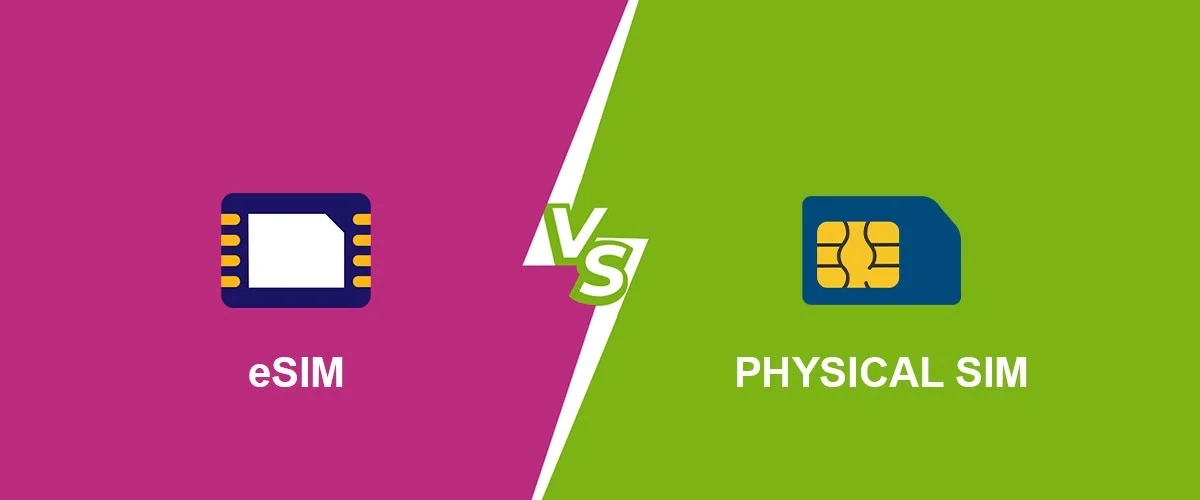
Dual SIM Functionality: eSIM Enables New Possibilities
eSIM technology has made dual SIM functionality practical and accessible for mainstream users. Modern smartphones support one physical SIM card plus one eSIM active simultaneously, allowing you to maintain two phone numbers on a single device. This capability serves numerous use cases: separating personal and business lines without carrying two phones, maintaining your home number while using local data plans during travel, or keeping numbers from multiple countries active for people who split time between locations.
The physical SIM plus eSIM combination provides optimal flexibility. Use your physical SIM for your primary number (personal or business) that rarely changes, while using eSIM for secondary purposes like travel data plans, temporary work numbers, or regional numbers. When traveling internationally, keep your physical SIM active to receive calls and texts on your regular number (often free or low-cost for incoming communications), while routing all data through a travel eSIM to avoid expensive roaming charges. This configuration eliminates the need to inform contacts of temporary number changes or miss important calls while abroad.
Devices with dual physical SIM slots (common in some Android phones, particularly in Asian markets) offer similar functionality without requiring eSIM support. However, managing two physical SIM cards proves more cumbersome than physical SIM plus eSIM—you must carry multiple tiny cards, manually swap them when changing plans, and risk losing cards during swaps. The eSIM approach stores multiple profiles digitally, allowing instant switching through software settings without handling physical components.
Device Compatibility and Ecosystem Considerations
Physical SIM cards offer universal compatibility across all mobile devices from any era. Whether you’re using a brand-new flagship smartphone, a budget device from 2015, or a basic feature phone, physical SIM cards work identically. This universal compatibility proves valuable when traveling to developing countries where you might purchase inexpensive local phones, when using backup devices during emergencies, or when helping elderly relatives who use older phones. Physical SIM cards also work in tablets, mobile hotspots, IoT devices, and other connected equipment that may not support eSIM technology.
eSIM compatibility remains limited to devices manufactured after 2018-2019, and even among recent devices, support varies. Most iPhones from XS/XR onward support eSIM, as do Samsung Galaxy devices from S20 onward, Google Pixel devices from 3 onward, and select models from other manufacturers. However, many budget and mid-range devices still lack eSIM support to reduce manufacturing costs. Additionally, some devices sold in certain markets (particularly China and some developing countries) have eSIM functionality disabled due to regulatory restrictions, even if the hardware supports it.
Carrier support for eSIM also varies significantly by country and operator. In developed markets like the United States, Western Europe, Japan, and South Korea, most major carriers support eSIM for consumer plans. In developing markets, eSIM support remains limited or nonexistent, with carriers focusing on physical SIM card infrastructure. This geographic variability means eSIM works well for travelers from developed countries visiting other developed countries, but proves less useful for travel to or within developing regions where carrier support is limited.
Security and Privacy Considerations
eSIM technology offers security advantages over physical SIM cards in several scenarios. The embedded chip cannot be physically removed from your device, preventing SIM swap fraud where criminals steal your physical SIM card to hijack your phone number and intercept authentication codes. With eSIM, your carrier profile is locked to your specific device and protected by your device’s security features (passcode, biometric authentication), making unauthorized access significantly more difficult. If your phone is stolen, thieves cannot simply remove your eSIM and use it in another device as they could with physical SIM cards.
However, eSIM’s device-bound nature creates challenges if your device is lost, stolen, or damaged. With physical SIM cards, you can remove the card from a broken device and immediately use it in a backup phone, maintaining service continuity. eSIM requires contacting your carrier to deactivate the profile on your lost/broken device and issue a new QR code for installation on your replacement device—a process that can take hours or days depending on carrier responsiveness. For travelers in foreign countries when their device breaks, this delay can create significant communication challenges.
Privacy considerations favor physical SIM cards in certain scenarios. eSIM activation requires internet connectivity and interaction with carrier servers, creating digital records of your device information and location. Privacy-conscious users may prefer physical SIM cards that can be purchased anonymously with cash and activated without linking to personal accounts. However, for most mainstream users, eSIM’s security advantages outweigh these privacy considerations, particularly the protection against SIM swap fraud that has become increasingly common.
Detailed Comparison Table: eSIM vs Physical SIM
| Feature | eSIM | Physical SIM | Winner |
|---|---|---|---|
| Activation Time | Instant (2-3 minutes) | Requires obtaining physical card | eSIM |
| Travel Convenience | Purchase before departure, instant activation | Must find local shops or airport kiosks | eSIM |
| Regional Coverage | Regional plans cover 20-40 countries | Typically single-country only | eSIM |
| Dual SIM Support | Physical SIM + eSIM simultaneously | Requires dual physical SIM slots | eSIM |
| Device Transfer | Requires reinstallation or transfer feature | Remove and insert instantly | Physical SIM |
| Compatibility | 2018+ devices, limited budget phones | Universal (all devices, all eras**Converting the Article** ) |
Physical SIM |
| Carrier Support | Limited in developing markets | Universal worldwide | Physical SIM |
| Security | Cannot be physically removed | Can be stolen and used in other devices | eSIM |
| Device Failure | Requires carrier contact for new QR code | Move card to backup device instantly | Physical SIM |
| Profile Storage | 5-10 profiles stored digitally | Must carry multiple physical cards | eSIM |
| Cost (Travel) | $11-45 for regional plans | $20-40 at airports, $10-20 local shops | Varies |
| Ease of Use | Requires Wi-Fi, QR code scanning | Insert card, works immediately | Physical SIM |
Frequently Asked Questions: eSIM vs Physical SIM
Can I use both eSIM and physical SIM card at the same time?
Yes, most modern smartphones support dual SIM functionality with one physical SIM card and one eSIM active simultaneously. This configuration allows you to maintain two phone numbers on a single device, which proves particularly valuable for international travel. You can keep your primary physical SIM active to receive calls and texts on your regular number while routing all data through a travel eSIM to avoid expensive roaming charges. To configure this on iPhone, go to Settings > Cellular > Cellular Data and select which line handles data traffic. On Android, navigate to Settings > Network & Internet > SIMs and designate which SIM handles calls, texts, and data. You can customize these settings independently, allowing your physical SIM to handle voice calls while your eSIM handles data, or vice versa. This dual SIM capability eliminates the need to choose between maintaining your regular number and accessing affordable data while traveling—you can have both simultaneously on a single device.
Is eSIM more expensive than physical SIM cards?
eSIM and physical SIM card costs vary significantly depending on context and provider. For international travel, eSIM plans often provide better value than physical SIM cards purchased at airports, which typically impose 50-100% convenience premiums. RedEx’s Europe eSIM costs $11 for 3GB/30 days, while airport physical SIM cards for Europe often cost $25-35 for similar allocations. However, for extended stays in single countries, local physical SIM cards frequently offer better value—a Thai physical SIM might provide 50GB for $15 monthly, while eSIM plans rarely match such generous allocations at comparable prices. For everyday domestic use, eSIM and physical SIM plans from the same carrier typically cost identically—carriers don’t charge premiums for eSIM service. The cost difference emerges primarily in travel scenarios, where eSIM’s convenience and multi-country coverage often justify modest premiums, while physical SIM cards offer better value for long-term single-country stays. Evaluate your specific use case: frequent international travel favors eSIM, extended stays in single locations favor local physical SIM cards, and domestic everyday use shows no cost difference between technologies.
What happens to my eSIM if my phone breaks or gets stolen?
If your phone breaks or is stolen, your eSIM profile remains locked to that device and cannot be used until you deactivate it and install a new profile on a replacement device. Contact your carrier’s customer support to report the lost/broken device and request eSIM deactivation on the old device and a new QR code for installation on your new device. This process typically takes a few hours to 24 hours depending on carrier responsiveness. For travel eSIM providers like RedEx, contact their 24/7 support through their website or app (accessible from any device) to request a new QR code, which they can usually provide within minutes. Once you receive the new QR code, install it on your replacement device following the standard eSIM installation process. Your phone number and remaining plan balance transfer to the new device. This process proves more cumbersome than physical SIM cards, which you can simply remove from a broken device and insert into a backup phone instantly. For this reason, travelers should consider carrying a backup device or ensuring they can quickly access eSIM provider support if their primary device fails. The advantage is that thieves cannot use your eSIM if they steal your phone—it remains locked to your device and protected by your passcode/biometric security.
Can I switch from eSIM back to physical SIM card?
Yes, you can switch from eSIM back to physical SIM card at any time, though the process varies by carrier. For primary carrier service (your main phone plan), contact your carrier’s customer support and request conversion from eSIM to physical SIM. Most carriers will mail you a physical SIM card or allow you to pick one up at retail stores, then provide instructions for deactivating your eSIM and activating the physical card. This process typically takes a few days for card delivery plus a few minutes for activation. Your phone number and plan remain unchanged—only the SIM format changes. For travel eSIM services like RedEx, you don’t “convert” to physical SIM since these are temporary travel plans rather than permanent service. Instead, you simply allow your eSIM plan to expire after your trip and use physical SIM cards for future travel if you prefer. The flexibility to switch between technologies means you’re never locked into one approach—use eSIM when it offers advantages (international travel, dual SIM functionality) and physical SIM when it suits your needs better (device compatibility, simpler transfers, local long-term plans).
Do all countries and carriers support eSIM?
No, eSIM support varies significantly by country and carrier. Developed markets including the United States, Canada, Western Europe, Japan, South Korea, Singapore, Australia, and New Zealand have widespread eSIM support from major carriers. In these regions, most primary carriers (Verizon, AT&T, T-Mobile in the US; Vodafone, Orange, O2 in Europe; SoftBank, NTT Docomo in Japan) support eSIM for consumer plans. Developing markets show more limited support—some countries have no eSIM infrastructure, while others have only select carriers offering eSIM service. China presents special challenges due to regulatory restrictions, with eSIM support limited to specific use cases and often disabled on devices sold in the Chinese market. For international travel, eSIM providers like RedEx, Airalo, and others operate independently of local carrier eSIM support by partnering with carriers that provide data access—you don’t need the local carrier to support eSIM consumer plans, only for them to provide network access to eSIM providers. This distinction means you can use travel eSIM in countries where local carriers don’t offer eSIM to their own customers. Before traveling, verify that your eSIM provider covers your destination countries. For primary carrier service (your main phone plan), check your carrier’s website or contact customer support to confirm eSIM availability in your country.
Is eSIM better for the environment than physical SIM cards?
Yes, eSIM technology offers environmental advantages over physical SIM cards by eliminating plastic card production, packaging materials, and shipping logistics. Physical SIM cards require manufacturing plastic cards (typically PVC), printing, packaging in plastic holders, and distribution through supply chains that consume energy and generate emissions. The GSMA estimates that eliminating physical SIM cards could prevent millions of tons of plastic waste annually as eSIM adoption increases globally. Additionally, eSIM eliminates the waste generated when users upgrade devices or change carriers—physical SIM cards from old services typically end up in landfills, while eSIM profiles simply delete digitally without physical waste. However, the environmental impact difference is relatively small in the context of overall smartphone environmental footprint—the energy and materials required to manufacture the phone itself dwarf the impact of SIM card production. eSIM’s environmental benefits are real but modest, making it a positive factor but not a primary reason to choose eSIM over physical SIM cards. More significant factors like convenience, functionality, and cost should drive your decision, with environmental benefits serving as a welcome additional advantage of eSIM technology.
Final Verdict: Which Technology Should You Choose?
Neither eSIM nor physical SIM card technology is universally superior—each excels in specific scenarios and use cases. For international travel, eSIM provides overwhelming advantages through instant activation before departure, multi-country coverage with seamless border crossing, and dual SIM functionality that maintains your regular number while using affordable data plans. Travelers visiting multiple countries over short periods should strongly favor eSIM solutions like RedEx’s regional plans that eliminate the hassle of purchasing local SIM cards at each destination.
For everyday domestic use, the choice depends on your device and carrier support. If your device supports eSIM and your carrier offers it, eSIM provides marginal convenience advantages through instant activation and the ability to maintain backup carrier profiles. However, physical SIM cards work equally well for domestic service and offer simpler device transfers when upgrading phones. The practical difference for domestic use is minimal—choose based on personal preference and carrier availability rather than expecting dramatic functionality differences.
For extended stays in single countries (digital nomads, long-term travelers, expatriates), physical SIM cards often provide better value through generous local plans that offer more data at lower prices than travel eSIM options. The convenience of eSIM matters less when you’re staying in one location for months, while the cost savings from local physical SIM plans become significant over time. In these scenarios, purchase local physical SIM cards and save eSIM for shorter trips to other countries.
The ideal approach for many users combines both technologies: maintain your primary service on a physical SIM card for simplicity and universal compatibility, while using eSIM for travel, temporary secondary numbers, or specific situations where eSIM’s advantages shine. Modern dual SIM devices enable this hybrid strategy, allowing you to leverage the strengths of each technology without forcing an all-or-nothing choice. As eSIM support continues expanding and more devices adopt the technology, the balance will gradually shift toward eSIM for most use cases—but in 2026, physical SIM cards remain relevant and valuable for numerous scenarios where their simplicity and universal compatibility provide genuine advantages.