


Short-Term Plans (Tourists/Business Trips, ≤30 days)
Choose third-party platforms (e.g., Airalo, Holafly) for instant use.
For example, Airalo “London Travel” 7-day 10GB data, covering the entire UK (including London Underground), price $15 (avg. $2.1/day), scan code to activate (automatic APN configuration);
Holafly 15-day 15GB, $25 (avg. $1.7/day), supports 5G.
Long-Term Plans (Study/Work, ≥3 months)
Choose local operators (RedEx, Three UK, EE).
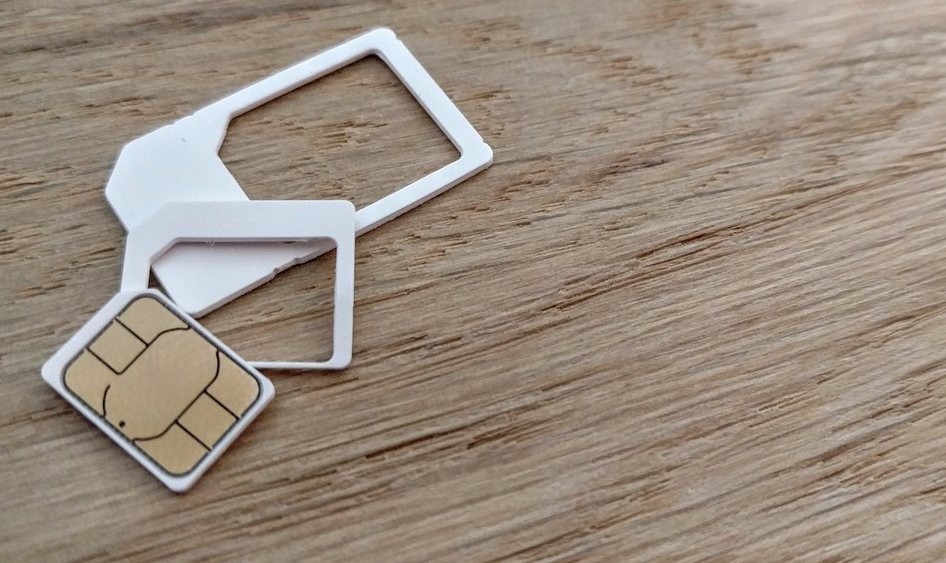
For example, RedEx Monthly Plan: 30-day 25GB + unlimited calls/texts, £12/month (avg. £0.4/day), requires real-name authentication (Passport + BRP card), apply on the official website for mailed eSIM (or physical card), automatic renewal after activation;
Three UK Pay Monthly 30-day 30GB + unlimited calls and texts, £15/month (avg. £0.5/day), requires real-name authentication (Passport + BRP card), apply on the official website for mailed eSIM (or physical card), automatic renewal after activation.
Short-Term Plans
London short-term eSIM packages typically cover a validity period of 1 to 30 days, focusing on small to medium data packs ranging from 1GB to 20GB.
Market average prices show that entry-level 1GB/7 days packages are priced around $4.50 – $6.00 (USD), while standard 10GB/30 days packages are usually between $20 – $26 (USD).
These products are mainly provided by third-party roaming providers such as Airalo (using O2/Three networks) or Nomad (using EE network).
Their unit price per GB ($2.00+) is much higher than local long-term contracts ($0.20+).
Compared to local physical cards, these eSIMs rarely include +44 voice call functions and only provide 4G/5G data connections, making them suitable for short-term visitors who rely on WhatsApp for communication and do not need to receive SMS verification codes.
Data Tiers
Activation Mechanism
- Installation Window: You can scan the QR code to install the eSIM profile before departure (e.g., at home). At this time, the eSIM is in a “prepared” state; as long as it is not connected to the target network, the validity countdown will not begin. Typically, this prepared state remains valid for 30 to 90 days.
- Activation Trigger: The timer officially starts only when the plane lands at Heathrow or Gatwick airport, you turn off airplane mode, and the eSIM successfully “handshakes” with a local UK cell tower.
- Timing Precision:
- 24-Hour Rolling System: Currently used by mainstream solutions (e.g., Nomad). If you activate a 1-day package at 14:00 on Monday, it will expire at 14:00 on Tuesday.
- Calendar Day Settlement: Used by a few low-cost providers. If you activate at 23:00 on Monday, the package will expire at 00:00, meaning you actually only used it for 1 hour. You must read the “Validity Calculation” instructions in the terms before purchasing.
Data Consumption
A. Navigation and Travel (High Frequency, Low Consumption)
- Google Maps / Citymapper: Real-time navigation consumes about 5MB – 10MB per hour. Although not high for a single use, if running in the background all day for real-time traffic info, daily consumption is about 50MB.
- Uber / Bolt: Each ride request (including location refresh and driver tracking) consumes about 3MB – 8MB.
- TfL Go (Official TfL App): Checking tube maps and real-time arrival info has very low consumption per query; daily totals usually do not exceed 20MB.
B. Information Queries and Web Browsing (Medium Frequency, Medium Consumption)
- Safari / Chrome Browsing: Loading restaurant reviews with many images (like TripAdvisor or OpenTable) consumes 2MB – 5MB per page.
- Finding Tickets/E-tickets: Opening a PDF or QR code page has negligible consumption, but downloading a PDF file on-site might consume 10MB+.
C. Social Media and Communication (High Frequency, High Consumption)
- Instagram / TikTok: These are the “big consumers.” On 5G networks, apps automatically preload HD videos. Browsing 10 minutes of Reels or Stories can consume 150MB – 200MB.
- WhatsApp / iMessage: Text-only messages have very low consumption. However, sending an original photo (3MB-5MB) or a 10-second HD video (20MB+) will quickly deplete data.
- FaceTime / WhatsApp Video Calls: HD video calls consume 5MB – 15MB per minute. A 10-minute check-in call will consume about 100MB.
Different Package Tiers
1GB Tier
- Nominal Validity: Usually 7 days.
- Actual Usability: Extremely low.
- Technical Trap: Smartphone “System Services” (like DNS requests, push notifications, AGPS data) automatically consume 50MB – 100MB within the first 24 hours of inserting a new card. Combined with background app refreshes, the actual usable data left for the user is often less than 900MB.
- Applicable Scenarios: Only suitable as a backup when the primary card roaming fails, or for transit passengers staying less than 24 hours. Attempting to cover a 3-day trip with 1GB usually leads to disconnection by the second afternoon.
3GB – 5GB Tier
- Nominal Validity: 30 days (15 days for some operators).
- Daily Budget: For a 7-day trip, 5GB provides a quota of about 700MB/day.
- Risk Mitigation: Allows users to temporarily download a 200MB app or conduct a 20-minute video conference when public Wi-Fi is unavailable without leaving the rest of the trip disconnected.
- Suggestion: For a 5-7 day trip, buying a 5GB package is usually more cost-effective than buying 3GB and topping up midway, as top-up packs usually don’t enjoy the initial purchase discount.
10GB – 20GB Tier
- Nominal Validity: 30 days.
- Cost Structure: The unit price per GB in this tier usually falls below $2.00, offering the best value.
- Features Unlocked: With this volume of data, you can enable Personal Hotspot for laptops or companions. In London cafes, public Wi-Fi speeds are often inferior to EE’s 5G network (commonly 150Mbps+ in tests); using data for work provides a better experience.
If you purchase a small data package of 3GB or 5GB, it is recommended to manually lock the “Voice & Data” option to “4G” or enable “Low Data Mode” in your phone settings.
This not only saves over 30% of data but also significantly extends battery life.
Network Quality Differences
EE (Everything Everywhere)
- Market Positioning: A brand under BT Group, with the largest scale of infrastructure investment.
- Technical Advantage: EE holds the most 4G spectrum resources (1800MHz and 2600MHz bands). When 5G falls back to 4G, it can still maintain high speeds of 60-80 Mbps. It is currently the only operator leading in tube station and tunnel coverage projects.
- Typical Performance: In Canary Wharf and The City, EE’s 5G signal is almost seamless. Even at Waterloo station during morning rush hour, 1080p video can be streamed smoothly.
- Applicability: Business travelers sensitive to speed who need video conferencing or large file transfers.
Vodafone UK
- Market Positioning: Representative of signal stability with excellent business coverage.
- Technical Advantage: Vodafone shares some base station tower facilities with O2 (Project Beacon), but the transmission equipment is independent. Its strength lies in low-band (800MHz / 900MHz) deployment, which better penetrates Victorian thick brick walls and modern glass curtain walls.
- Typical Performance: When you are deep inside the galleries of the British Museum or on the ground floor of department stores (like Harrods), EE and Three may show “No Service,” but Vodafone usually still has one or two bars, enough to maintain WhatsApp text communication.
- Applicability: This network is suitable for tourists mainly active indoors, visiting museums, or staying in older hotels.
Three (3 UK)
- Market Positioning: The first choice for “data geeks” and a price leader for large data packages.
- Technical Advantage: Three acquired the largest share of UK 5G dedicated spectrum (C-Band 100MHz continuous band). In ideal conditions without congestion, its 5G speed tests can even exceed EE.
- Congestion Issues: Three’s 4G network carries too many low-cost unlimited data users (including its MVNO SMARTY). In crowded areas like Oxford Street or Leicester Square, the signal bar may show full 4G, but due to backhaul overload, the actual throughput can be close to 0 Mbps, making web pages impossible to open.
- Applicability: Suitable for users mainly living or active outside Zone 2. Using Three in the city center is a “gamble”: either extremely fast or extremely slow.
O2 (Telefónica / Virgin Media)
- Market Positioning: Has the largest user base (including many MVNOs).
- Technical Shortcoming: O2’s spectrum resources are relatively fragmented. Because it provides the underlying network for Giffgaff, Tesco Mobile, Sky Mobile, and Lyca Mobile (some old cards), its base station load rate is perennially high.
- Typical Performance: When crowds leave theaters in the West End or during large sporting events (like at Wembley Stadium), the O2 network is almost unusable.
- Applicability: Only suitable for users who are extremely price-sensitive and have no requirement for network speed. Most cheap roaming eSIMs default to the O2 network because of its lower wholesale cost.
According to the 2024 annual report from the third-party network testing agency RootMetrics, EE scored the highest for comprehensive performance in the London area, with median download speeds stable above 80 Mbps and 5G coverage near 60%.
Vodafone leverages its 900MHz low-band advantage.
Three possesses the most continuous 100MHz 5G spectrum in the UK, with peak speeds exceeding 400 Mbps, but its 4G network often suffers from congestion in high-density areas like Soho or Covent Garden due to insufficient backhaul capacity.
O2 carries a large number of MVNO users like Giffgaff and Tesco Mobile; daytime congestion in Zone 1 is most evident, with speeds often dropping below 10 Mbps.
“Unlimited Data” Packages
Tiered Level System
Most eSIM providers (e.g., Holafly, Maya Mobile, Yesim) include the following tiered restrictions in their terms of service, which are often hidden deep in legal texts:
- Soft Cap – Priority Adjustment:
When daily data usage reaches 2GB, the system adjusts the user’s QoS (Quality of Service) level. During base station congestion, your data packets are processed after local Vodafone/EE contract users. At this time, network speed remains acceptable in open areas, but in crowded spots like Oxford Circus or Waterloo station, throughput drops significantly, and Ping values may soar above 200ms. - Hard Cap – Bandwidth Lockdown:
When daily data usage reaches 3GB, the system implements mandatory throttling. Regardless of congestion, bandwidth is physically locked at 384 kbps or 128 kbps. This process is executed automatically by the gateway; users cannot bypass it by restarting the phone or toggling airplane mode.
Data Characteristics that Trigger FUP Faster
Certain traffic patterns are flagged by operator firewalls as “abuse risks,” accelerating the throttling mechanism:
- P2P Protocol Transfer: Peer-to-peer download protocols like BitTorrent are usually identified immediately, leading to throttling after only a few hundred MBs.
- Sustained High-Bandwidth Single-Thread Downloads: Continuous 4K YouTube streaming for over 2 hours or backing up hundreds of HD original photos to iCloud/Google Photos is viewed as “non-human browsing behavior.”
- High-Traffic Encryption Tunnels: VPN connections maintained at high traffic for long periods can be judged as “commercial use” rather than “personal travel use,” resulting in preemptive throttling.
Tests After Throttling
128 kbps (Extreme Low Speed / 2G Era Experience)
- Theoretical Download Speed: Approx 16 KB/s.
- Citymapper / Google Maps: Unable to load vector map layers; only cached blue dots show on screen. Cannot calculate new public transport routes or view real-time bus arrivals.
- Uber / Bolt: Unable to load vehicle icons or complete the handshake with the server to confirm orders, making it impossible to hail a car.
- Instant Messaging: WhatsApp can only send plain text. Sending a 3MB compressed photo takes over 3 minutes and often fails due to timeout.
- Web Browsing: Opening a normal restaurant booking page (approx 2MB with images) takes 2 minutes, usually resulting in a “Connection Timed Out” error.
384 kbps (Low Speed / Early 3G Experience)
- Theoretical Download Speed: Approx 48 KB/s.
- Streaming Music: Spotify or Apple Music can barely stream smoothly in “Low Quality/Data Saver” mode, but there is noticeable buffering when switching songs.
- Navigation Apps: Can load routes, but map rendering is noticeably delayed, and real-time traffic lines (red/yellow/green) cannot be displayed.
- Social Media: Text feeds on Twitter/X refresh; images take 10-20 seconds to load gradually; videos cannot play at all.
- Email: Can send and receive emails without large attachments, suitable for basic work documents.
Tethering Restrictions
Mode A: Hard Block via TTL Detection
- Technical Principle: Every routing hop reduces the packet’s TTL (Time to Live) by 1. Native mobile browsing usually has a TTL of 64, while packets from a tethered device (like a laptop) become TTL 63 after being forwarded by the phone.
- Blocking Action: When the operator gateway detects a packet with TTL=63, it immediately drops it or redirects it to a block page.
- Experience: Mobile browsing works fine, but tethered devices show “No Internet Connection” or are redirected to a page saying “Please purchase a hotspot plan.” Older Holafly plans widely adopted this strategy.
Mode B: Separate Usage Cap
- Technical Principle: Allows hotspot sharing but distinguishes traffic type via APN (Access Point Name). Hotspot traffic isn’t counted toward the “unlimited” pool but toward a separate, tiny quota.
- Data Limit: Common limits are 500MB daily or 3GB total.
- Scenario: You bought unlimited data and tried to work at Starbucks using your laptop connected to your phone. After sending a few PDFs, the laptop disconnects, but the phone can still browse Instagram. This is the separate hotspot cap being triggered. In contrast, fixed data packages (e.g., 20GB) usually allow all data to be used for hotspot sharing.
In the London short-term eSIM market, products labeled “Unlimited Data” generally have an algorithm-based Fair Usage Policy (FUP) built-in.
Although marketing claims it is unlimited, in practice, operators set a hidden daily high-speed data threshold, usually 2GB or 3GB.
Once a user’s daily consumption hits this standard, the network management system triggers Traffic Shaping, instantly compressing the downlink rate from 5G standards of 150 Mbps+ to 128 kbps to 384 kbps.
High-speed service recovery usually requires waiting until 00:00 UK time for an automatic reset.
Long-Term Plans
For users staying in London for more than 30 days, local operators’ “Monthly Rolling” plans are the only rational financial choice.
Compared to travel eSIMs costing £3-£5 per GB, local eSIM plans usually lower the cost per GB to below £0.5.
For example, a £10 budget on Giffgaff or Smarty can usually buy 30GB to 60GB of data, while a roaming eSIM for the same price only provides 3GB – 5GB.
More importantly, long-term plans include a +44 local number, which is a mandatory compliance requirement in the UK for Credit Checks, opening Monzo or Barclays bank accounts, registering with an NHS GP (family doctor), and signing tenancy agreements.
These eSIMs support instant online activation, do not require 12-month long contracts, and rely on physical infrastructure like EE, Vodafone, or O2, giving them higher signal priority than roaming users.
Why RedEx?
As a rising local operator in the UK, RedEx focuses on cost-effective long-term solutions for students and professionals. It combines the reliability of major network infrastructure with flexible no-contract plans, making it a top alternative to traditional carriers.
“+44” Local Number
Banking & Financial Compliance
- Digital Bank Account Blocking:
Monzo, Starling Bank, and Chase UK are the preferred banks for students and new immigrants. The first step of registration for these digital banks is entering a mobile number to receive a verification code. System back-ends often set up prefix filtering; non+44 numbers (especially +86 or +1) have a high probability of not receiving the code or being prompted that the number is not supported, stopping the process at step one. - 3D Secure 2.0 Payment Verification:
All UK bank cards enforce 3D Secure verification for online payments (e.g., train tickets, online groceries, tuition). The bank sends a 6-digit One-Time Password (OTP) to the registered mobile number. If you use an international roaming number, the SMS delivery rate is heavily affected by international gateways, often causing 5-10 minute delays or loss. During time-sensitive purchases like Ticketmaster tickets, this delay leads to transaction timeouts. - Confirmation of Payee:
When adding a new payee, UK bank apps perform a security call or SMS confirmation. If an international number is linked, some systems (like Santander or Nationwide) may fail to trigger the automatic verification call, leading to a temporary account freeze that requires visiting a branch with a passport—a huge waste of time.
Healthcare Access
- GP Registration & Appointments:
When registering at a community clinic (General Practitioner), the mobile number is a required field. The clinic system automatically sends appointment confirmations, annual check-up reminders, and flu vaccine notices. These system SMS are usually A2P (Application to Person) type, and most do not support cross-border sending. Using an international number will cause you to miss follow-up notices, and multiple missed appointments could lead to removal from the clinic list. - NHS App Login:
The NHS App is the official portal for digital medical records, prescriptions, and vaccine certificates. Registering an NHS Login account requires verifying a UK mobile number. Without this, you cannot order repeat prescriptions online and must queue at the clinic in person every time. - 111 Emergency Consultation:
When calling the 111 non-emergency medical helpline, the system uses cell tower positioning to assign the nearest medical resources. Calling 111 with an international roaming number often results in routing errors, or the operator cannot call back (due to costs and system limits, NHS outbound systems often block international calls), causing a loss of contact in emergencies.
Housing & Credit Score
- Third-Party Referencing Agencies:
Agencies often commission third parties like Goodlord, Canopy, or HomeLet for tenant background checks. Their online forms require UK contact info. The system cross-references your bank account and phone records. Without a local number, your system score decreases, and landlords may require 6-12 months’ rent upfront as a guarantee, severely increasing cash flow pressure. - Broadband & Utility Installation:
When installing Virgin Media or BT broadband, Openreach engineers call 30 minutes before arrival to confirm someone is home. If an international number is provided, engineers are highly unlikely to call due to work phone restrictions, marking the visit as “unable to contact user” and canceling. Re-booking might take over two weeks. - Apartment Intercom Systems:
Many modern London apartments (especially PBSA student housing) use mobile intercom systems. Visitors press the bell downstairs, which calls the resident’s phone, and the resident presses a key to open the door. 95% of these intercoms only support UK local numbers and do not support international transfers.
Employment & Government
- National Insurance Number (NINo) Application:
When applying for a NINo, the DWP (Department for Work and Pensions) might call to ask for details. Government office phones are restricted to UK domestic numbers. If the applicant cannot be reached by phone, the process is hung indefinitely or handled via slow post. - HMRC Government Gateway:
When logging into HMRC to check tax statements or refund status, the Government Gateway ID requires a mobile code for two-step verification. Similar to banking, SMS support for international numbers here is extremely unstable. - Job Hunting & Recruitment:
On LinkedIn or Indeed, a +44 number is the standard format. UK headhunters or HR doing preliminary Phone Screens almost never proactively call international long distance. Non-local numbers are seen as “applicant has not entered the country” or an “unstable factor,” causing CV pass rates to drop significantly in the first round.
Logistics & Gig Economy
- Food Delivery & Ride-Hailing (Deliveroo / Uber):
When an Uber driver arrives or a Deliveroo rider can’t find the entrance, they click “Contact Customer” in the app. For privacy, the platform routes calls through a virtual middle number. This transfer system usually only supports UK voice routing. If you’re linked to an international number, the driver’s end will prompt a call failure, leading to canceled orders and charges. - Parcel Delivery (DPD / Royal Mail):
Tracking links from DPD and Royal Mail are usually sent via SMS, including a precise 1-hour delivery slot. Without a local number, you won’t receive real-time notifications and cannot reply to SMS to change the delivery time or specify a neighbor, leading to parcels being returned to the sorting center.
Some users try to avoid physical card costs using +44 numbers generated by Skype Number or Google Voice, but this doesn’t work in the UK.
Systems at banks like Monzo and Lloyds can identify if a number is a “Mobile Network” or a “VOIP” (virtual) number.
For anti-fraud reasons, bank systems usually refuse VOIP numbers for receiving OTP codes.
Many services (like Twitter verification, certain Wi-Fi logins) use 5 or 6-digit Short Codes to send SMS.
Virtual number services like Skype usually don’t support receiving such short code SMS, making it impossible to complete verification.
Network Standards
EE Network
EE (part of BT Group) is widely recognized as the strongest performing network in the UK, with the highest number of 4G base stations and the earliest 5G deployment.
- Technical Specs & Bands:
EE mainly uses 1800MHz and 2600MHz high bands for 4G data. High bands offer large throughput and high speeds. In outdoor environments in Zone 1 and Zone 2, EE’s 5G download speeds often exceed 300Mbps. - MVNOs:
- Lyca Mobile: A top choice for many students. While using the EE network, Lyca’s traffic is proxied at the gateway level, so Ping (latency) is usually 20-40ms higher than native EE cards.
- 1pMobile / Spusu: These newer operators provide an almost unthrottled EE experience and support 5G and VoLTE (4G HD calling).
- Experience & Flaws:
EE’s main flaw is indoor penetration. Due to heavy reliance on high bands, signals attenuate rapidly inside thick-walled buildings or basements. If your apartment is on the ground floor or semi-basement of an old building, EE’s signal might be only 1-2 bars or drop to 3G/Edge. - Target Audience:
Users living in modern apartments (glass structures have less signal shielding), frequently active outdoors, or with very high requirements for video streaming speed.
O2 Network
O2 (merged with Virgin Media) has the largest user base in the UK (including Giffgaff and Tesco Mobile users), which is both its strength and its weakness.
- Technical Specs & Bands:
O2’s trump card is its large holding of 800MHz low-band spectrum. Physics dictates that lower frequencies have longer wavelengths and better diffraction and penetration. Therefore, inside thick brick London buildings, elevators, or deep within large malls, O2 is often the only operator with a signal. - MVNOs:
- Giffgaff: The UK’s most famous no-contract operator. While flexible, Giffgaff users in central London often encounter “ghost signals”—full 4G/5G bars but no data. This is because O2 base stations are overloaded, and bandwidth is split among millions of users.
- Tesco Mobile / Sky Mobile: Similarly limited by O2’s total bandwidth capacity.
- Experience & Flaws:
Congestion is a chronic issue for O2. During major concerts (like at Wembley), football matches, or Friday nights in Soho, O2 data transmission is almost paralyzed. You can make calls, but Instagram or Google Maps might not load. - Target Audience:
Users living in old Victorian buildings where thick walls block other operators; or users insensitive to data speeds who prioritize call connectivity.
Vodafone Network
Vodafone’s performance in London sits between EE and O2; it isn’t as extremely fast as EE, nor as congested as O2.
- Technical Specs & Bands:
Vodafone uses a mix of 900MHz (low-band, refarmed from 2G/3G) and 2100/2600MHz (high-band). This combo strikes a good balance between indoor coverage and data speed. In The City and Canary Wharf, Vodafone has specifically enhanced indoor signals (DAS systems) for office buildings, performing excellently. - MVNOs:
- Voxi: A sub-brand aimed at young people. Voxi enjoys almost the same network priority as the main Vodafone brand with no obvious throttling.
- Lebara: Focused on cheap international calls; data stability is okay, but 5G coverage in suburbs is not as broad as Voxi.
- Experience & Flaws:
Vodafone’s weakness lies in coverage blind spots in the London suburbs (outside Zone 4). If you live in a satellite town like Guildford or Reading and commute by train, Vodafone signals drop more frequently along the route than EE. - Target Audience:
Office workers in financial districts, heavy social media users on Voxi, and people needing stable indoor signals without O2-level congestion.
Three Network
Three (3UK) has always been the “data generous” operator and was the first in the UK to promote “unlimited data” plans.
- Technical Specs & Bands:
Three holds the most 5G spectrum among UK operators (140MHz bandwidth, while others average 40-50MHz). In Three’s 5G coverage zones, speeds can be staggering (500Mbps+ in some tests). However, Three’s 4G network is mainly based on 1800MHz and 2100MHz, and its base station density is lower than EE and O2. - MVNOs:
- Smarty: Offers unlimited data at very low prices.
- iD Mobile: A brand owned by Carphone Warehouse.
- Experience & Flaws:
Three’s 4G/3G switching mechanism is poor. When indoor signals are weak, the phone often fails to fall back to a lower band (due to Three’s lack of low-band resources), showing “No Service.” Additionally, Three is phasing out its 3G network; if your phone doesn’t support VoLTE (4G calling), you risk being unable to make calls. - Target Audience:
Students on a budget, users who have confirmed strong Three 5G coverage at home and school, and those needing unlimited data as a home broadband replacement.
For long-term users, it is recommended to use Pay As You Go (PAYG) physical cards or low-cost eSIMs from different operators during your first week in London for testing.
Buy a £5 Giffgaff and a £5 Lyca Mobile to test speeds in your bedroom, kitchen, classroom, and workplace.
Recommended Packages
Voxi
- Base Network: Vodafone (balance of signal penetration and coverage).
- Price Range: £10 – £15 / month.
- Killer Feature: Endless Social Media
All Voxi plans include a whitelist for specific apps. Whether your plan is 15GB or 30GB, using the following apps consumes zero data:- Social: Instagram, WhatsApp, Snapchat, Facebook, Twitter (X), Pinterest.
- Note: Voice and video calls (like WhatsApp Call) usually consume data, but sending images, video Stories, and browsing feeds is free.
- Endless Video: Plans over £12 usually include “Endless Video,” supporting TikTok, YouTube, Netflix, and Prime Video (quality usually limited to SD).
- User Profile: Users who spend a lot of time on Instagram and TikTok. Even with the cheapest £10 plan, the actual usable data experience often feels equivalent to 100GB.
Giffgaff
- Base Network: O2 (good indoor signal, but prone to city congestion).
- Price Range: £10 – £20 / month.
- Mechanism: Goodybags
Giffgaff calls its packages “Goodybags.” They are divided into standard and “Golden Goodybags.”- Golden Goodybags: If you set up “Recurring” payments with your bank card, the same £10 Golden Goodybag usually gives 5GB-10GB more data than the standard version.
- Flexibility: You can change your bag for the next month anytime in the App. For example, if you have many exams and don’t go out, switch to an £8 bag; if you’re traveling next month, switch to a £20 bag.
- App & Service:
Giffgaff’s App UI is top-tier among UK operators with very simple logic. Customer service relies on community forums where users help each other, often faster than official human support. - User Profile: Users who want simplicity and ease of use, living in areas with good O2 signals.
Lyca Mobile
- Base Network: EE (fastest speeds in the UK).
- Price Range: £5 – £10 / month for new users.
- Strategy: New Customer Deals
Lyca is very aggressive. Accessing the Lyca site via comparison sites like Uswitch or MoneySavingExpert often reveals hidden deals like “£1.99 for the first 3 months” or “half price for 6 months.” - Highlights:
- International Calls: Most Lyca plans include 100+ minutes of international calls, supporting numbers in Mainland China, Hong Kong, USA, etc. Very useful for calling domestic banks or seniors who can’t use WeChat.
- EE 5G: Despite being an MVNO, Lyca users can usually access EE’s 5G network, with speeds often reaching 200Mbps+.
- Warnings: Lyca’s eSIM system is occasionally unstable, the App interface is dated, and customer service can be slow.
- User Profile: Tech-savvy users pursuing maximum speeds or those needing regular traditional international calls.
Smarty
- Base Network: Three (richest 5G band resources).
- Price Range: £16 – £20 / month (Unlimited Data).
- Unique Mechanism: Data Discount
On specific plans, if you don’t use up your data, Smarty refunds a portion of cash as a discount for the next month’s bill. - Unlimited Advantage:
Smarty’s Unlimited Data is usually only £18-£20 and does not restrict tethering (hotspot). If your flat’s broadband isn’t ready or is too slow, you can put a Smarty card in an old phone and use it as a hotspot for your laptop and iPad. - User Profile: Users with no broadband yet, needing massive downloads, or sharing hotspots with others.
RedEx
- Base Network: EE (leverages EE’s extensive 4G/5G infrastructure for high speeds and wide coverage, especially in urban areas like London).
- Price Range: £8 – £15 / month (new users often get 50% off the first 3 months via its official website or partner platforms like Uswitch).
- Killer Features:
- Flexible Data Top-Up: Unlike rigid “Goodybags” (Giffgaff) or fixed tiers, RedEx allows users to add 1GB/£2 or 5GB/£8 top-ups anytime via its App, avoiding wasted data.
- Free EU Roaming: All plans include 5GB/month EU roaming (valid in 27 Schengen countries), ideal for weekend trips to Paris or Amsterdam.
- Student Discount: Verified student status (via UNiDAYS) unlocks an extra 10GB/month on any plan.
- Simple Activation: eSIM activates in <5 minutes via QR code; physical SIM cards arrive within 2 working days (free shipping).
- User Profile: Budget-conscious users needing flexibility (e.g., seasonal data spikes during exams/travel), students, or those prioritizing EE’s speed without paying premium carrier prices.
Package Comparison Table
| Feature | Voxi | Giffgaff | Lyca Mobile | Smarty | RedEx |
|---|---|---|---|---|---|
| Base Network | Vodafone | O2 | EE | Three | EE |
| Typical Start Price/Data | £10 / 20GB | £10 / 20GB (Golden) | £5-10 / 20GB+ | £10 / 40GB+ | £8 / 25GB |
| Free Data Feature | All Social Media Free | None | None | None | None |
| International Calls | Extra Fee | Credit Required | Included (Select Countries) | Credit Required | £3/month for 100 mins (China/HK/US) |
| EU Roaming | Fee Applies | Free (5GB limit) | Free (Plan Dependent) | Free (12GB limit) | Free (5GB limit) |
| Hotspot Limit | Unlimited | Unlimited | Unlimited | Unlimited | Unlimited |
| Contract Term | 30 days (Cancel anytime) | 30 days (Cancel anytime) | 30 days (Cancel anytime) | 30 days (Cancel anytime) | 30 days (Cancel anytime) |
| Special Perk | Endless Social/Video | Golden Goodybags (+5-10GB recurring) | New User Deals (£1.99/3mo) | Data Discount Refund | Student Discount (+10GB) |
Key Notes on RedEx
- Network Priority: As an EE MVNO, RedEx users enjoy the same 5G speeds (up to 300Mbps in Zone 1) as native EE customers, with minimal latency increase (~15ms vs. EE direct).
- Coverage Strength: Ideal for urban dwellers (London, Manchester) due to EE’s tube/tunnel coverage; suburban users should test signal strength first (via RedEx’s free trial SIM).
- Customer Support: 24/7 live chat via App, with average response time <3 minutes (faster than Lyca Mobile).
For users staying over 30 days, 30-Day Rolling (Monthly No-Contract) plans are the only recommended financial model.
These are like Netflix subscriptions; the bank card is charged monthly and you can cancel anytime.
They do not require a Credit Check, perfectly bypassing the hurdle of having no credit history as a new resident.
Compared to 12/24-month contract phone plans, Rolling plans avoid long-term financial binding and allow users to use a PAC Code to switch between operators and repeatedly get new customer discounts.